
Spinocerebellar Ataxia’s are a group of neurodegenerative, genetic conditions that gradually impact an individual’s capacity to coordinate movement. Spinocerebellar ataxias are characterised by a loss of neurons, primarily within the cerebellum which is the part of the brain responsible for balance and coordination. However, studies show that degeneration can also present within the brainstem, spinal cord and basal ganglia (Klockgether et al., 2019).
There are over 40 subtypes of Spinocerebellar ataxia and due to this, symptoms can vary based on the subtype, however, common symptoms can include:
- Unsteady gait.
- Reduced coordination of fine and gross motor tasks.
- Slurred or slow speech (dysarthria).
- Vision impairments including difficulty controlling eye movements.
- Fatigue.
Due to the progressive nature of this condition, individuals experience reductions in independence, confidence, physical and psychological wellbeing, capacity to engage in hobbies, activities of daily living and workplace duties. This has a negative impact on overall quality of life. Currently, Spinocerebellar Ataxia’s do not have a cure, however, there are targeted therapies which can aid in slowing the progression of the condition.
The Benefits of Exercise for Spinocerebellar Ataxia
How can an Exercise Physiologist help?
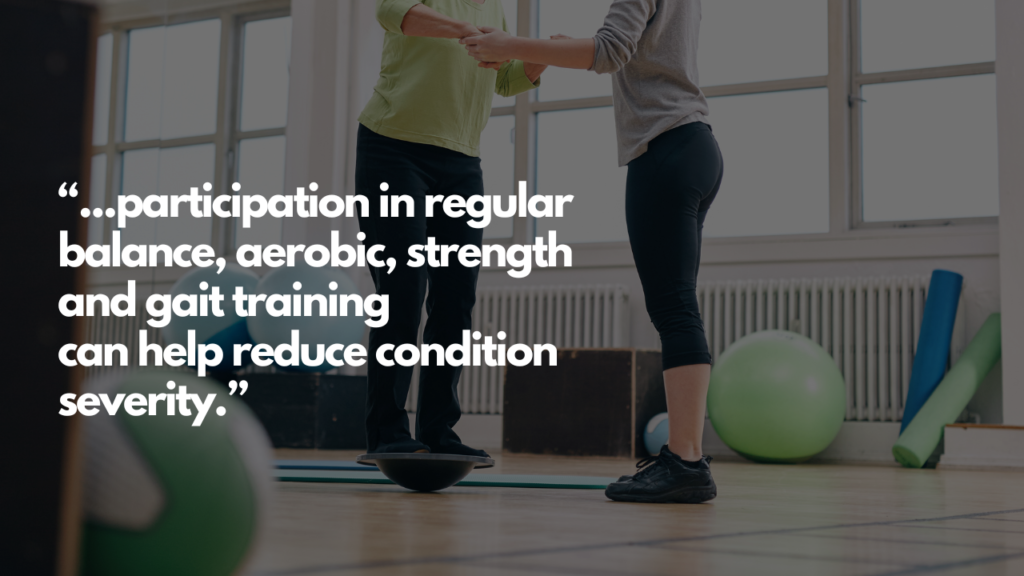
Commencing engagement with an Exercise Physiologist is beneficial for those diagnosed with Spinocerebellar Ataxia’s. This is due to Exercise Physiologists being ale to provide a safe, targeted and evidence-based exercise program that is tailored to each individual’s presentation. Exercise Physiologists are able to guide individuals through balance and gait specific training and task-specific exercises that promote improved motor control and decrease falls and injury risk. As symptoms change over time, Exercise Physiologists can adapt programs to continue promoting improved function, independence and provide ongoing education and support.
Matsugi, A., Bando, K., Kondo, Y., Kikuchi, Y., Miyata, K., Hiramatsu, Y., Yamanaka, Y., Tanaka, H., Okuda, Y., Haruyama, K/. Yamasaki, Y. (2025). Effects of physiotherapy on degenerative cerebellar ataxia: a systematic review and meta-analysis. Front. Neurol. 15- 2024. https://doi.org/10.3389/fneur.2024.1491142
Klockgether, T., Mariotti, C. & Paulson, H.L. Spinocerebellar ataxia. Nat Rev Dis Primers 5, 24 (2019). https://doi.org/10.1038/s41572-019-0074-3 Barbuto, S., Kuo, SH., Winterbottom, L. et al. Home Aerobic Training for Cerebellar Degenerative Diseases: a Randomized Controlled Trial. Cerebellum 22, 272–281 (2023). https://doi.org/10.1007/s12311-022-01394-4
Winser, S., Chan, H. K., Chen, W. K., Hau, C. Y., Leung, S. H., Leung, Y. H., & Bello, U. M. (2023). Effects of therapeutic exercise on disease severity, balance, and functional Independence among individuals with cerebellar ataxia: A systematic review with meta-analysis. Physiotherapy Theory and Practice, 39(7), 1355–1375. https://doi.org/10.1080/09593985.2022.2037115
Written By Uplift EP, Mykaila Walls