
Exercise physiology for psychological injury is one of the most underutilised yet evidence-supported interventions available within the Australian workers’ compensation system. As an Accredited Exercise Physiologist (AEP) and Director of Uplift Exercise Physiology, I recently presented this case at the Exercise & Sports Science Australia (ESSA) Symposium, and the data is hard to argue with.
Here is what GPs, case managers, and insurers need to know about psychological injury recovery.
What is an accredited exercise physiologist and why does it matter for mental health?
An Accredited Exercise Physiologist is a university-qualified health professional, accredited by Exercise & Sports Science Australia (ESSA), who prescribes and delivers exercise-based interventions for people with complex health conditions. AEP services are claimable under Australian workers’ compensation schemes.
In the context of psychological injury, AEPs work alongside psychotherapy and medication as a core pillar of evidence-informed care, not an optional add-on.
How does exercise physiology help psychological injury recovery?
The evidence base is clear. Therapeutic exercise reduces symptoms of anxiety, depression, and psychological distress, improves mood, sleep quality, and cognitive performance, builds resilience, and accelerates return-to-work timelines. These outcomes are supported by peer-reviewed research and, increasingly, by local workers’ compensation data from NSW.
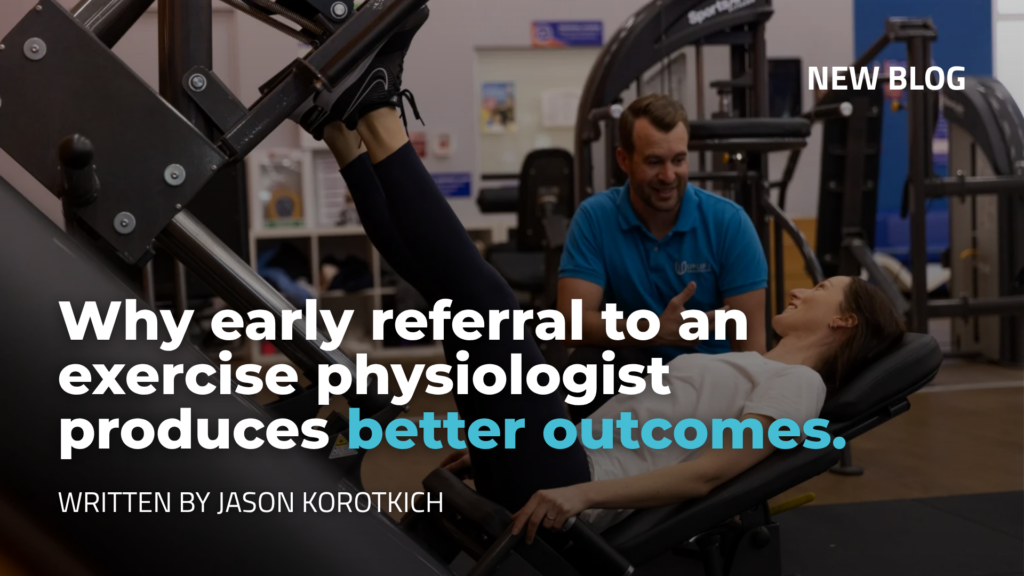
Why early referral to an exercise physiologist produces better outcomes
This is the finding I consider most important for workers’ compensation stakeholders. Unpublished data from the NSW State Insurance Regulatory Authority shows that workers referred to exercise physiology within 30 days of a psychological injury claim achieve significantly higher return-to-work rates at 13, 26, 52, and 104 weeks compared to those referred later in the claim.
Early referral is not premature. It is the single most impactful timing decision a GP or case manager can make.
What does an AEP do in a psychological injury claim?
The role extends well beyond exercise prescription. At Uplift Exercise Physiology, our AEP-led approach includes supervised and tailored exercise programs to support recovery and return to work, facilitating long-term exercise self-management beyond the claim, identifying barriers to recovery using motivational interviewing and goal-setting, managing co-occurring physical health risks, and coordinating care with the broader treating team.
Programs are delivered across home, community, hydrotherapy, gym, clinic, and telehealth settings, always built around what is meaningful and achievable for the individual.
Who should be referred for exercise physiology?
All individuals with a psychological injury are suitable, including those diagnosed with PTSD, depression, anxiety, and adjustment disorder (you can read more about the benefits of exercise on mental health conditions here). Complex physical comorbidities are a reason to refer, not a barrier. AEPs are specifically trained to manage these presentations.
Patients showing social withdrawal are a particularly strong referral candidate. AEP-led programs can meet people where they are, gradually rebuilding community connection alongside physical capacity.
Referral should only be delayed for patients in acute psychological crisis (make a quick referral here), those overwhelmed by competing claim commitments, or those already maintaining pre-injury activity levels.
A real-world example: exercise physiology supporting a paramedic’s recovery
We had a paramedic present to us with depression and emotional exhaustion following repeated trauma exposure. They had low motivation, disrupted sleep, social withdrawal and no clear path back to work. Following GP referral to our practice, we began with short outdoor walks and light strength work in a quiet local park: achievable, low-pressure, and meaningful. As routine and confidence returned, we progressed to structured gym sessions and small group classes. The outcome was improved mood, restored socialisation, and a graduated return-to-work plan underway.
This is the work. It is patient-centred, collaborative, and grounded in evidence.
How to refer
At Uplift Exercise Physiology, we welcome referrals and are available to discuss any case where exercise physiology might support a worker’s recovery.
Get in touch with the Uplift team today because the evidence is clear, and the sooner we act, the better the outcomes.